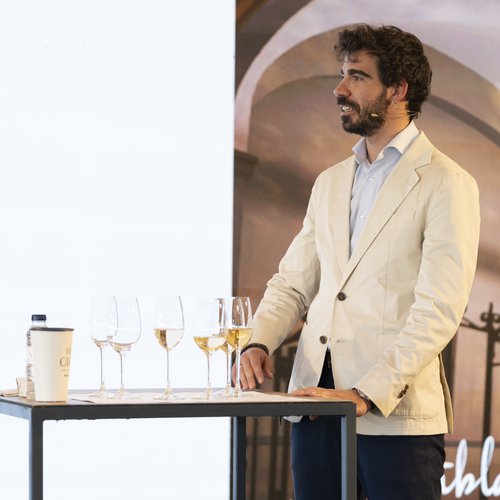
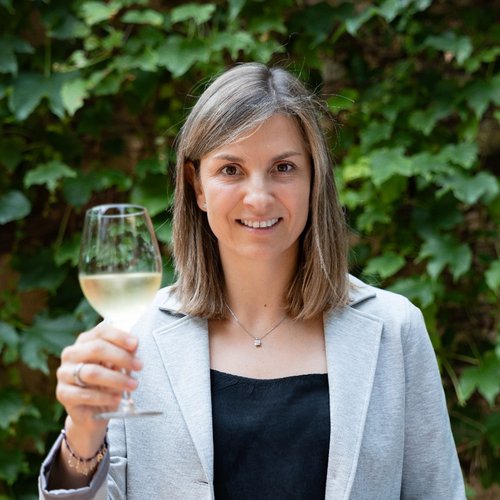
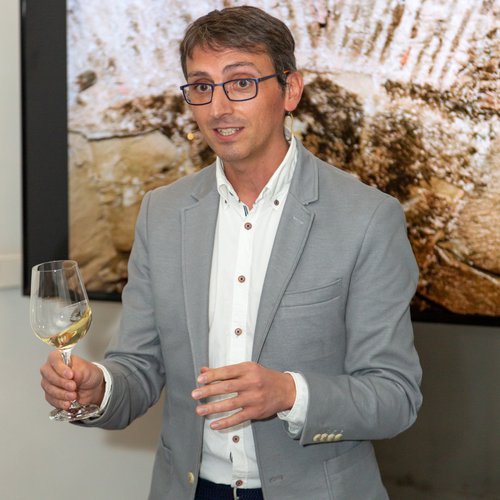
María José Huertas: “The foreign customer associates our country with Cava, and I think it’s a lovely word and a concept that we should be promoting” at Paco Roncero’s restaurant in the Casino de Madrid
One of the most celebrated and recognized sommeliers, with a quarter century of experience and expertise at Paco Roncero’s restaurant in the Casino de Madrid, insists that quality is the great trump card of Catalan sparkling wine
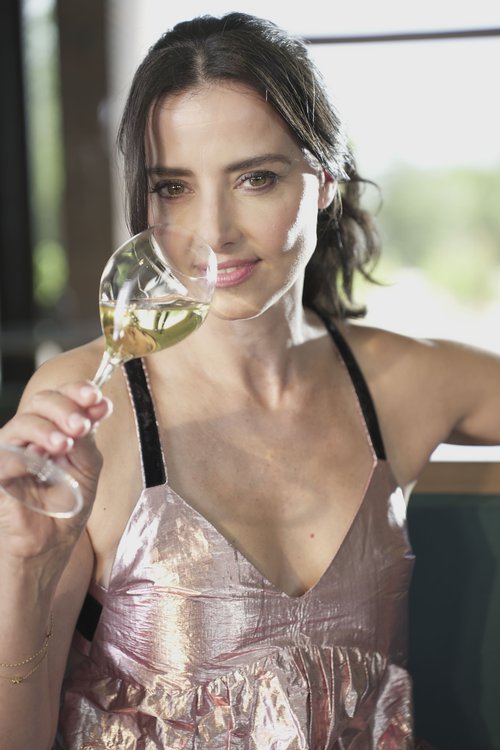
There isn’t a year that goes by without María José Huertas picking up an award or distinction for her quiet, tenacious, and excellent work as a sommelier. The most recent came this very year, at the awards given by the Guía de Vinos Gourmets (Gourmet Wines Guide) and Gentleman España magazine. In 2025, she also received recognition for her career in the wine industry at the 40th anniversary of Gourmets magazine, and the year before that she was ranked number one on Spain’s Top 100 Sommeliers list. Back in 2013, she had already won Spain’s National Gastronomy Award from the Real Academia de la Gastronomía. An agricultural engineer born in Zamora, Huertas is, without question, one of the most celebrated, recognized, and admired sommeliers around. “At first I felt tremendous gratitude, but at the same time I thought people were crazy to pay so much attention to me. Then you come to understand the value of ongoing recognition, and now I receive it as a gift. ‘Wow, how lovely,’ I tell myself. And at the same time, I think I’ve never let my guard down, stopped learning, or stopped seeking things out. On an emotional level, they motivate me enormously — they remind me that we’re still here.”
For the past quarter century, she has been head sommelier at Paco Roncero’s two-Michelin-star restaurant in the Casino de Madrid, but she has always made time for endless learning. She is a taster for Decanter and the ITI in Brussels, and she also writes about wine for La Vanguardia, which keeps her fully up to date on developments in winemaking. In this interview, she shares her knowledge from a vantage point of wisdom and calm. She is orderly and methodical in the Casino’s wine cellar, and just as much so in the way she expresses herself. She reflects on the value of Cava drawing on her daily experience at the restaurant, and offers a bold statement: “Even the oldest, most spectacular Cava is still cheap.” She is committed to preserving the word that foreign diners so clearly associate with the country, and to the value of the traditional method.
Of all your awards — and there have been many — which do you value most?
The National Gastronomy Award, because that was still early in my career. And then the Top 1 ranking, which felt like reaping the rewards of many years of work, study, and effort.
A quarter century at Paco Roncero’s restaurant…
I’ve been working reduced hours for years now. I started that to help balance work and family life, because of motherhood. The Casino is well looked after when I’m not there. And that gives me the peace of mind and time to do a million other things and keep learning. I’ve never fallen into boredom or monotony at the restaurant — quite the opposite. I have a solid foundation that lets me buy and sell what I need, I’m given flexibility and trust, I have a comfortable schedule, and an extraordinary team. I like to keep experimenting and evolving, and that’s what I do at the Casino. And that way, the sommelier’s craft we practice keeps adapting too, to the styles of wine that emerge as times change.
What’s the restaurant’s wine list like?
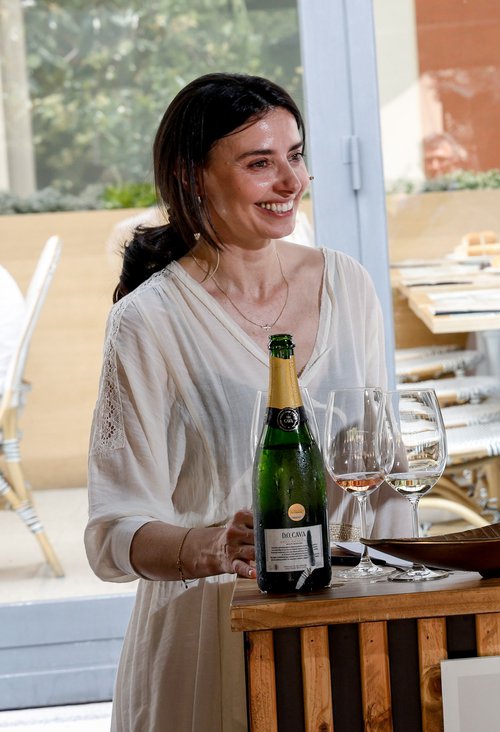
Cava has a strong presence, as, fortunately, we get a lot of foreign customers. If you ask a foreigner to describe Spain in five words, Cava is one of them. Someone a bit more knowledgeable might even bring up Sherry. They associate our country with Cava, and I think it’s a lovely word and concept that we should be promoting. I don’t know whether they know the production regions, but they do know that Cava is tied to the traditional method. Our list offers a wide range of quality Spanish sparkling wines. We carry all of them, but, again, Cava carries a lot of weight, and I think we should be promoting it.
How would you go about that?
I think we need to keep insisting on quality. I think we can look at Bordeaux and see that there are great wines there, but also a lot of volume. On average, it’s one of the cheaper regions, and that’s not something we’re aiming for. So, we need to keep building up the top tier of quality — the Cavas de Guarda Superior de Paraje Calificado — the fully integrated producers, and also understand that, on the other end, there are minimum quality standards to meet, even for the more affordable wines. We need to account for the different quality tiers and accept that everything comes down to price. I think that even the Cava with the most aging and the most spectacular character is still cheap.
And, when does María José Huertas like to drink Cava?
I’d say at night, when I’m wrapping up my day, when I’m home in silence and I light a candle. It’s my moment — the day is done, I’ve got a show on. And in that moment of quiet reflection, I find myself wanting a sparkling wine.
Which is what we’re used to seeing in a lot of American shows…
Because they’re more hedonistic. They drink wine as soon as they get home, to unwind. I actually like to drink it even after dinner.
Let’s go back to the Casino. What are people drinking there today?
If you factor in that we’re a country where it keeps getting hotter and the food keeps getting lighter, more and more people are drinking whites and rosés, though there’s always room for reds. It’s clear that with steamed clams, you’re going to want a sparkling wine, without a doubt. White and sparkling wines pair better, both because of the climate and, above all, because of where gastronomy is heading. We can keep adding in more aged options, as with Cava, and different colors — rosé is appealing too. I’ll tell you something curious: given the choice between a rosé Cava and a white Champagne, customers go for the Cava.
Consumption is falling. Faced with that, María José Huertas, what do you think?
I try to look the other way. I think alcohol and wine are going through a really rough patch of being targeted right now. But I have to say that my customers drink, they drink well, and they drink a lot. It surprises me that customers from Asia either don’t drink at all, or drink a great deal. And the amount they drink is more than I could ever manage. Anyway, all sorts of things happen.
What do you recommend for food and wine pairing?
I like to travel through the different regions and styles of wine we have in Spain. Sparkling wine, without a doubt, but also Sherry, white wines from Galicia or the Balearic Islands, Catalonia, and the Canary Islands, or oak-aged Ruedas, old-style rosés from Rioja, reds from Ribera, Navarra, or the islands, made with local varieties, from the Balearics or the Canaries…
What food pairing would you suggest for a long-aged Cava, and for a shorter-aged one?
For the first, sole in a butter sauce. For a Cava de Guarda, appetizers — since they’re lighter and saltier.
How has Cava’s presence at the table been growing?
I think it’s very powerful. It’s always been there, but it’s true that its moment has shifted, and the jump from dessert to the aperitif course is hugely significant. More and more, people are having whole meals with the same Cava throughout, or starting with a very light one and finishing with a long-aged Cava or a rosé.
Besides attitude, humility, and knowledge, what else should a good sommelier have?
I’d say one virtue I have is that I’m extremely obsessive about order — at home, in the closet, and at the Casino. In the cellar, everything is meticulously inventoried: the bottles sold, the ones remaining. Ana and I work hand in hand, and vintage changes are marked perfectly. It’s true that we also have dream conditions to work with, but order is key. Everything is also clearly marked and placed on the wine list. And whatever sells gets restocked. And when someone comes in to help us out because there’s extra work, in under an hour they know where everything is, and they’re already part of the team.
Order and consistency…
The wine list is manageable — by the glass and by the bottle. If you’re organized, the work goes better. When the cellar is chaos, it’s a lot harder.
You took part in a DO Cava campaign a while back. What was that like?
Well, I loved being an ambassador alongside Pepe Solla. We paired Cava with mussels. I think it was a great match, and it’s probably something worth exploring further — the pairing, and connecting quality foods to a specific origin.
If you had to replace mussels in a future campaign, what would you pair with Cava?
Well, I’d go with the classics — olives, anchovies — or also a really good jamón, which lends itself to all kinds of different pairings, from a fino sherry to a Cava with some aging to it. It’s very versatile. And then there’s fish, as I mentioned before — a long-aged Cava goes beautifully with it. It’s a wonderful pairing.