“Cava lets you have a top-class gastronomic experience,” Giorgia Scaramella, sommelier at Aromata
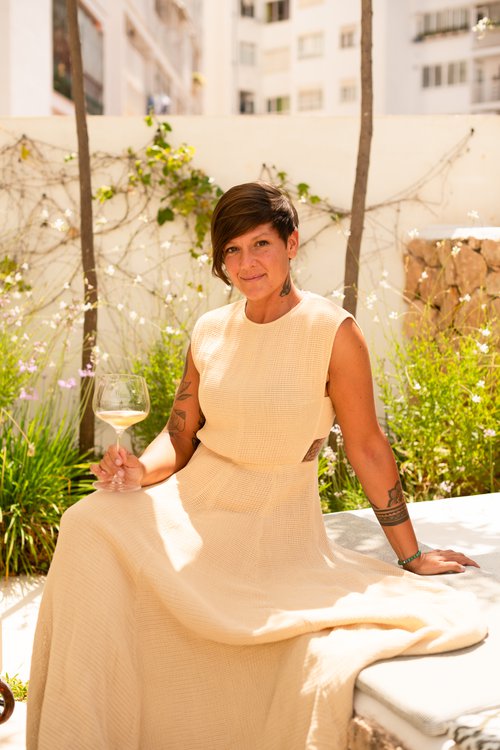
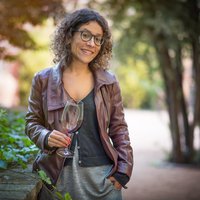
I began my idyll in Mallorca thirteen years ago. “I saw Palma Cathedral on the right and the sea on the left, and I immediately said to myself I wanted to live here.” Giorgia Scaramella is an architect and sommelier, of Italian origin. She gave up plans and drawings for the contours of wine. She has had a year “filled with love and flattery” for all the awards she has won, all of them well-deserved: best head waiter at the Premis Gastronòmics de Mallorca and finalist for the revelation head waiter award at Madrid Fusión. She was also ranked among the top 100 sommeliers in Spain. She likes serving, working in the dining room and interacting with guests, but she has recently taken on a lot of internal management work with the move of the Aromata restaurant, headed by Mallorcan chef Andreu Genestra. She is head sommelier. “I've discovered new facets,” she adds with satisfaction. “The awards are a big boost. Someone has to step forward, to lead, but I've won them thanks to the team,” she recognises, with sincerity. Despite having been in the back office a lot, she's very much up to date with the latest in wine: she exchanges visits, conversations and emails with producers whenever she can. When she's able to, she explores the vineyards that she then explains and recommends with elegance and a smile. She'll be coming back to the Penedès region soon. Cava is naturally on her wine list: “Bubbles play a starring role. We serve them right at the start, for the diner to begin their meal with a self-celebration.”
When does an architect like you discover wine?
I started out indirectly when I was very small, because my grandfather had a cellar and made wine for himself and for his neighbours. But I never thought of becoming a sommelier. In any case, I've always been used to family get-togethers and tables. My grandmother prepared the game my grandfather hunted, and we also drank wine at these weekend meals. I studied architecture, but I soon began to learn about the wine world, because it fascinated me. It wasn't until I came to Mallorca, after spending a year as an air hostess around the world, that I made professional contact with it.
And how did this contact come about?
First I worked with a chef from Pavia who knew a lot about the wine world. I was in the dining room but I was interested in the drinks side. Then I was with Marc Fosh; his sommelier was Gabi Lucas, who left soon after I arrived, leaving me alone with an 800-bottle cellar in a Michelin-starred restaurant. I was there for nearly 7 years and then I needed a change. I was obsessed with the star and I devoted my life to it. Now I'm with Andreu Genestra, who's given be the chance to be head waiter at Aromata. It's a new start, with something new, fresh... They'd been in the same place for 10 years, and in the last year we've coped with a change of location together.
The chef, who's originally from Inca, is clear that the roots of his cooking are Mallorcan and Mediterranean. Ingredients and freshness. How do you work the drinks part?
I always follow my own line, but I've changed a lot as a sommelier. I appreciate proximity and wines from Mallorca, because they have great added value and we have to show them to the world. We focus on wines from the Mediterranean region, from Catalonia, from Malaga, from Andalusia, from Valencia, but there's also a place for the classics from Ribera and Rioja, from Rías Baixas, from the Basque Country, and we travel to France, Italy, Greece and so on, too.
What do you like to explain about wines?
That behind every bottle there's a person. 99% of the time I know the person who makes the wine I'm serving. I've spoken to them, we've exchanged information, we've met... I think that makes the difference in the dining room: connecting and communicating with people. It isn't just about opening a bottle they're sure to like, but giving it a face and explaining the work of the person behind it.
And what part does Cava play?
I'd say it's fundamental, we always recommend starting off with bubbly. We're ambassadors for historic Cava wineries and we have very close relations with wineries in the Penedès, with whom we often exchange bottles. We like to have widely-varying Cavas, and depending on the season we can have up to 7 or 8 bottles open. There are always reasons for serving them.
So what does this welcome mean?
We want it to be a self-celebration. Cava is sparky, it's a declaration of intentions, this self-celebration we propose is a way of saying, “Today you're going to have a great time with your gastronomic experience.”
A toast to celebrate but much more...?
Yes, I think Cava is having a moment like Sherry: they've been sidelined for a long time, but now we're rediscovering them, and they're playing a starring role at our tables. Bubbly has body, diversity, aromas that go beyond the basics. It offers you a top-class gastronomic experience and it's a drink that you want to repeat.
At Aromata, have you also noticed an increase in consumption of white wine and Cava?
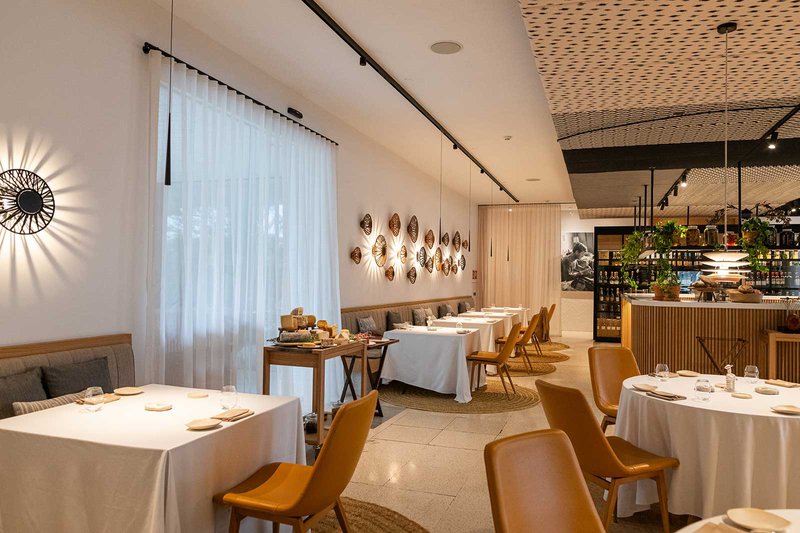
Our menu is 80% seafood and white meat... So it demands this. But also with local food matching, with the black pig that's a key part of our menu, a slightly oxidative or long-aged bubbly goes perfectly. It's a brilliant match. Do you know what I like? When Cavas give a prominent role to native grape varieties: xarel·lo, macabeu and parellada, because they express themselves spectacularly, speaking to us of the place.
Why do you think the Catalans aren't proud enough of what we have?
My partner always tells me that because I'm Italian I believe more in everything, in fashion, in food, in oil, in wines. You're perfect. You believe in your products so much, he often reminds me. Your expressions changes when you talk about your food... Because you love it all so much... And it's true that the Catalans, the Mallorcans, the Spanish, need to believe like this. We have a spectacular product. I see all its potential, in Mallorca, Catalonia and Spain alike.
How has architecture influenced your work as a sommelier?
Before architecture, I did the humanities baccalaureate at high school. Greece is pure hedonism and beauty, and the wine world is full of this. It's pure pleasure. So I'm always looking for beauty, perfection, pleasure... I think all sommeliers look for them. And when you find these in a wine, in a Cava, you know that it transforms your evening and your experience.
What do you really need to be a good head waiter?
Communication above all. Forging a link with the client, and you learn this over the years, because you have to put aside your ego and your personal tastes. Over time I've learnt I have to adapt to the person in front of me; at first I found this hard because I'm impetuous. The client has to be able to choose, and we need to fit round that without losing our philosophy or our principles. Empathy is also important, and understanding that wine is pleasure and everybody experiences pleasure differently. It used to annoy me when a client cooled a wine down with ice or asked for a red wine and an ice bucket... Now I'm more tolerant and I try to understand what they want their experience to be like. I want them to leave happy and cheerful, to talk about it and to come back.
When does Giorgia Scaramella open a Cava?
There are lots of moments, but I remember one very special one when my sommelier friend Sebastian Longo took me to a place with two Michelin stars. I'll always remember how he gave me a III Lustros to taste when it was still Cava, and it's etched on my heart. The wine, the person, the discovery... they stay with you. I haven't been to the Penedès for a while now, but I'm going to make room in my agenda at the end of the season to visit wineries in the home of Cava. I like educational trips, where there's a fun side but I also learn a lot.
Do you prefer a matching menu or one bottle to go with the whole meal?
I like food matching, it's fun, you can try - and travel to - regions and countries, but I'm increasingly in favour of one, two or three bottles, depending on how many diners are at the table, and a couple of glasses next to them. I like drinking a bottle slowly and calmly, and seeing how it evolves. Appreciating it throughout its journey. Food matching is too much of a snapshot, but I must also say that I'm often asked for it at Aromata, and I like serving it because you can play with classics and other more contemporary wines. But I go more and more for less and better.