"Cava is versatility, and there's a bottle that's just right for every occasion." Koldo Rubio Sommelier at Cocina Hermanos Torres
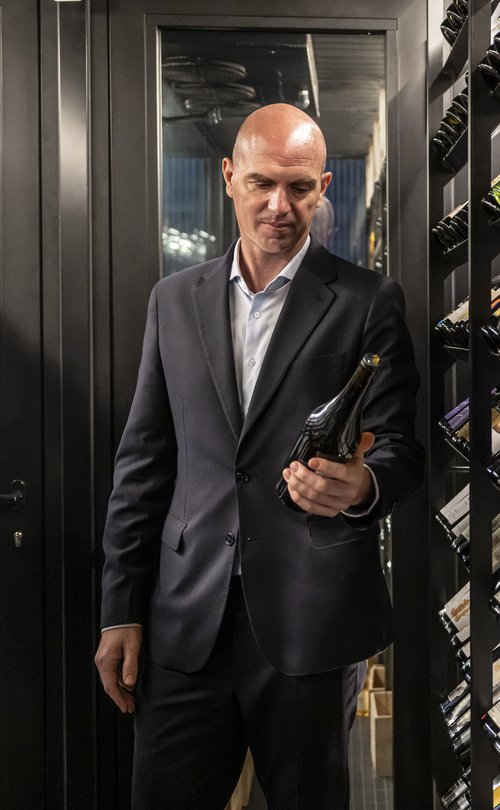
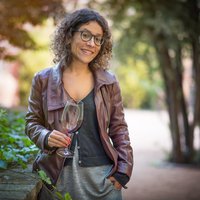
"Restaurant work gave me the opportunity to travel and discover cities, and also to find work right away." He arrived in Barcelona almost three decades ago with nothing but a suitcase and that curiosity and youthful hunger that can overcome anything, including uncertainty. Koldo Rubio is now the head sommelier at Cocina Hermanos Torres, the three-Michelin-starred restaurant captained by Sergio and Javier in Barcelona. Wine is of paramount importance in a place where "values and flavors" are key ingredients. "We're committed to the cult producers that we like and that the customer wants, but we're also looking for new talent," he states, confirming the restaurant's commitment to the human, social and transformative dimension of wine. A discreet and thoughtful man with a calm and deep demeanor, he receives, welcomes and shares in the same way that he respects and attends to the entire value chain of wine, from those who create it to those who enjoy it, without overlooking the often thankless work of distributors. His time selling wine has given him an even greater appreciation for the profession He loves telling stories, and stories about cava hold a special appeal for him, due to its tradition, its families (some closely connected to the restaurant), and their proximity to Sant Sadurní d'Anoia. To him, cava is still very much about celebration, though at Hermanos Torres the bubbles can be enjoyed from the beginning to end of the service, at various tables and on different occasions. He underscores its gastronomic versatility and is convinced that, as with sherry, the palate must be accustomed to its textures. "I think it's rare to be unable to find a Cava to pair with a given dish," he says, convinced.
What were your beginnings in the wine world like?
Before finally settling in Barcelona, I was in San Sebastian, at the Urepel family restaurant, where they had a very interesting cellar. I was responsible for restocking the bottles, and some labels caught my attention. So, I signed up for a wine course. I'd always liked and been interested in it, but in 2008, when I was studying the restaurant business, I realized that becoming a professional specialized in one area was a better move than being a generalist. I was studying at the ESHOB, in Barcelona. After that, you never stop studying, learning, and soaking up new knowledge, especially as you take on more responsibility. I learned from all the people who visited us at Cocina Hermanos Torres, and brought us wine, and you really get a deeper grasp when you know the person who created it, and its history.
Before Hermanos Torres, you were at Rocamoo and Dos Cielos.
Yes, in fact, Rosa Esteva gave her blessing to my hiring by Hermanos Torres, which was looking for a sommelier at the time. I received the offer through my co-worker, sommelier Audrey Doré, at Rocamoo. Dos Cielos was a smaller restaurant, and it took time to find a diaphanous space like the one we're in today. That's why I spent some time working in distribution, which was very important, as I came to appreciate how hard the work is. I have a lot of respect for everyone who visits us. You're out on the street every day, whether it's cold or sunny. It's good to have this vision, knowing that there's a lot of work behind it.
It's always good to be able put yourself in other people's shoes. For a sommelier, that's also essential.
It's about understanding why wines are made, getting to know the people who make them, where they come from, what traditions they have, and what they think. A few months ago, Strohmeier paid us a visit, an Austrian who is a leading figure in natural wine and articulates a truly coherent philosophy. He speaks of vibration and energy, and that's what his wines are like, so you simply can't taste them in a technical way. You have to enjoy and feel them.
Wine decisions go beyond the team of sommeliers, right?
There are four of us on the team, and Pablo Sacerdotte, who is the director, is also a sommelier. He always gets involved, as do the head chefs and some of the waitstaff who are studying to be sommeliers. There's a lot of interest in wine, and a willingness to collaborate with everyone. Our work structure is horizontal, and we take advantage of all those who want to contribute. We make decisions as a team, which allows us to go further.
Over the years, the wine list has evolved more in its vision than in its volume. What is Hermanos Torres' list like?
It's been 8 years, so today we have a list much closer to what we wanted at the beginning. We've bought a lot. We have a lot of space at the restaurant, and also an exterior cellar. There are wines that aren't on the list, and wines that we age here. It's easy to mishandle purchases. To do it well you have to spend a lot of time on it, which we do. We prefer going straight to the source, purchasing directly from the winery or distributor. We are committed to the cult producers that we like and that the customer wants, but we're also looking for new talent. We showcase these new producers, including them in our pairings. That way, we might secure allocations (smiles)...
How does that impact the number of wines you list?
Many come and go, but there must be about 1,500 in our cellar. There's a lot already purchased, and a lot reserved as well. We have a large network of contacts with whom we have relationships based on trust, and that makes it easier for us to obtain new wines. We also have the privilege of growing through people who mentor us—Carlos Horta, Luis Gutiérrez, Josep Roca, and others.
How do sparkling wines fit into this picture?
They're important, as we're right next to the heart of Sant Sadurní d'Anoia. As they’re close, we have easy access to winemakers, which helps us share the terroir they vinify and their traditions. In addition, Cava is a very versatile product. In the sixteen-course tasting menu, the wines can complement the dishes through their acidity, complexity, aging, varying sugar levels… Cava features many nuances, which opens up a lot of possibilities.
When are Cavas served at Cocina Hermanos Torres?
It could be at any time, from the beginning through to the end. As with sherry, one needs to accustom their palate to Cavas. One has to always train it, and give it a chance. Just because we don't like a first wine doesn't mean we won't like another one in the future.
Aside from its ingredients, techniques, legacy and talent, how could the restaurant's cuisine be described?
It's seasonal, and it's about flavor, made with love and attention to detail, with painstakingly worked stocks and extended cooking times, showing respect for our producers. There are many steps to each dish, and each one is well thought out. You have to see to even the shine of a sauce, in addition to its flavor. Then there are the aesthetics of the presentation, when a dish is served; they also matter, as they awaken sensations.
How does your wine selection complement such finesse and precision?
We try all the dishes that come out of the kitchen and create the most suitable pairings, carrying out at least two tastings to reconfirm them. Sergio and Javi also get involved and participate. We explain our choices and share why the pairings work. We have great respect for the ingredients and the chefs' meticulous work; we've clearly grasped their culinary vision, and our wine selection builds on that.
Talk to me about Cava.
There are high-quality products. In our cellar we stock everything from simple wines to extensively aged ones. We have very close relationships with some winemakers, who are almost like family, so it's easy for us to know all about everything they do, and be able to taste new vintages with them. I think Catalan Cavas offer excellent value, and we're seeing greater aging potential in them, which makes possible a more balanced dialogue with our gastronomic offerings.
Versatility is one of its attributes.
In haute cuisine, we value the longevity of wine and its evolution on lees for more substantial and concentrated dishes There's a moment for every cava. I stress its versatility, but I also like to highlight its high acidity and low alcohol content. All this goes very well with pairings. I think it's rare to be unable to find a sparkling wine to pair with a given dish.
How do you engage with your guests?
We interact with them often during the service. We never approach them with preconceived suggestions, but rather wait to see what each guest is interested in. We're not interested in discussing mainly technical aspects. Rather, we tell stories. We want to be a link between the producers and our guests.
When does Koldo Rubio enjoy a glass of Cava?
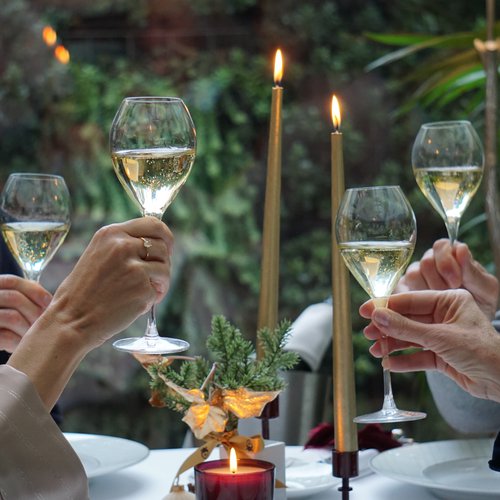
The truth is that I'm very traditional in that regard, and I reserve it for celebrations. Having just wrapped up the Christmas season, we've clearly toasted more than a few times. I think it's a fun, festive drink. You feel those bubbles on your palate, and suddenly you're celebrating.
It's easier to talk about wine when you do so in an authentic way, and the root of our project is just that, authentic, as are Javier and Sergio. Our philosophy is to give everyone their space, including the team of sommeliers, so that everybody can give 100%. For those who like contact with our guests, we facilitate that for them. We identify each sommelier's strengths and always build on those so they can do their very best. There's something we say: "Don't 'sulfite' talent—let it breathe."
Koldo, you're on the front lines of what's happening in the wine world. So, what are the trends?
We're going to see a decrease in wine consumption. We've noticed it a lot here. More cocktails and less wine. We have to expose people to wine and make it understandable, so that people can feel it. This is achieved through natural, low-alcohol wines, which are appealing to young people. We're going to discover even more of Portugal's wine potential, as well as that of Eastern Europe and Greece, where winemaking has deep roots. We lack great white wines in Spain; there aren't many options.