"We can't stop toasting with Cava. Sparkling wine is about joy, but we can also reach for it at other times." Robert Tetas from Sobretablas
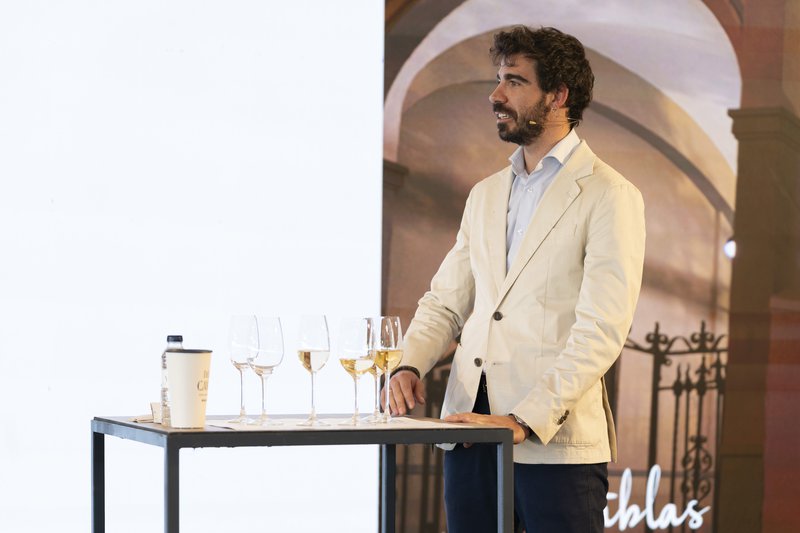
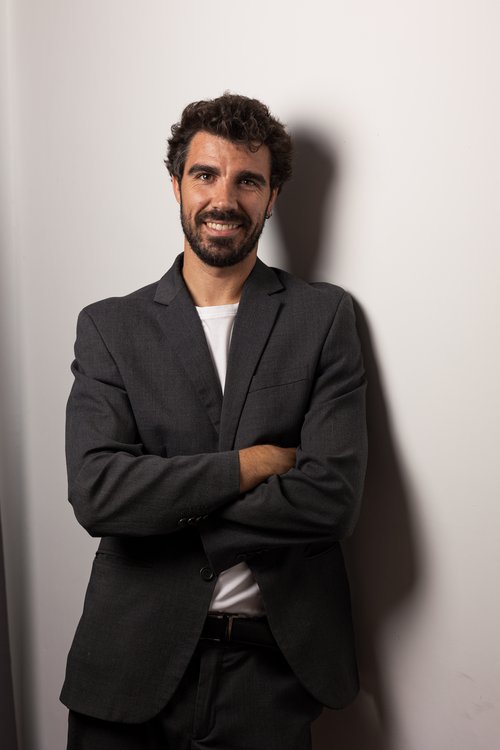
The world of wine became part of his life very early on. He studied for an advanced degree in Restaurant Management at the Hospitality and Tourism Institute in Girona, and by the second week of the program he was already learning about wine from instructors who spoke about it with passion. He had a deep love for nature and the mountains, and that's likely why he chose to specialize in the world of wine and the hospitality industry; while he doesn't work outdoors, he maintains a close connection to nature through the food he serves. Originally hailing from Girona, sommelier Robert Tetas has been living and working in Seville, Andalusia, for eight years. He is a co-owner of and the maître d’ at Sobretablas, a restaurant he opened with his wife, chef Camila Ferraro, in a 1929 house in the Porvenir quarter. They met at Celler de Can Roca, which he confirms was his greatest learning experience: "I'd given it a lot of thought and consideration. I wanted to learn from the best, in the best place." And that's exactly what happened. In a way, he was destined to end up there. He had enrolled in the Sommelier Specialization Course at the University of Girona, headed by Josep Roca, just before starting his internship there upon completing his Restaurant Management studies. At Sobretablas, they serve up both meals and moments; traditional cuisine with contemporary twists and a discerning, worldly gastronomic perspective. There's no shortage of sparkling wine, which is part of both the tasting menu and the welcome, and they deliberate over when to serve a longer-aged Crianza or a shorter-aged one. Tetas says that Cava strengthens his sense of belonging to Catalonia. There's a touch of daring and risk in the harmonies he creates. He has had to educate people to give it a special place alongside sherry and beer, the two dominant beverages in the Andalusian city, but he's succeeding, and he's also setting a precedent. "Sparkling wine is about joy, but we can also reach for it at other times." He speaks with kindness and enthusiasm before the midday meal, and serves as an ambassador of the deeper meaning of the concept of “restore,” which is at the root of the word “restaurant,” speaking of returning to things their original worth.
What do you take away from Celler de Can Roca?
The team was utterly dedicated, not just during their eight hours at work, but 24 hours a day, and that really motivates me. I worked alongside sommeliers Carles Aymerich, Dani Martínez, and Pilar Cavero...they answered any questions you had and provided you with a wealth of tools. And, of course, there was Pitu Roca as well. I was really eager to learn, and we studied a lot together. We entered competitions. It was a continuous training process. In the morning, we studied from books, and after the lunch and dinner shifts, we were fortunate enough to taste many meticulously selected bottles that had been opened at the restaurant, which allowed us to further expand our knowledge of the theory we had studied beforehand.
So, that's where you learned the culture of hard work.
I took everything I could from Celler de Can Roca. That's where I really started working as a waiter, alongside colleagues who taught me how to make recommendations, serve, understand customers' needs, and open the right bottle.
How did you make the decision to leave everything behind and move to Seville?
My partner, Camila, and I experienced the heyday of Celler de Can Roca. It had just been named number one in 2013, and reclaimed that title in 2015. We went on a series of trips around the world with the team, discovering different foods, cuisines, cultures, and wines and wineries from all over the globe. The level of experiences, knowledge, and the ability to learn, was truly spectacular. The company provided us with a wealth of tools. After all that, however, we decided to make a change and to do it together.
It wasn't a leap into the unknown, but the gulf between Girona and Seville is certainly vast.
We were eager to do it, and not to be on the other side of the company, running it, but to work together on our own project. It’s a lot of responsibility because it's not just about delivering a service; it's also about managing a team of people. We felt it was the right time, given our age and experience, but it was quite a challenge. Girona is the region with the most Michelin stars per capita, while Seville, with a population of one million, had only two at that time. We started out quietly with 200 wines, and I can tell you, they were affordable. The first year, we only served beer...
Since then, we've grown to over a thousand labels in stock now.
The leap we've made at Sobretablas is the extra something we want to offer our customers. There are colleagues in the restaurant industry who opened after us, and we all congratulate each other on what we're creating. The more of us there are, the more we can learn from each other.
Sobretablas is...
Coming from Celler de Can Roca, it's inevitable that people look for similarities. But it's clear that to be at Celler, I think you need a level of knowledge and a touch of pure magic that not every chef or sommelier possesses. And you also need to be in a specific location. We didn't want to create another Celler; we wanted to open a restaurant that would fit into a city with a long tradition of tapas. And we did it in a perfect location: we're in a quiet residential neighborhood, in a house from 1929 that's about 800 square meters. We wanted to ensure hospitality, for customers to come in for an aperitif, or have leisurely lunches or dinners, enjoying after-meal conversation. That's where we resemble Celler. We want diners to spend as much time as they like at our place, enjoying the full dining experience in a relaxed atmosphere... The word “restaurant” comes from “restore,” and that's what we aim for. We don't want time to stand still. Rather, we want our guests to have dynamic, positive experiences and to recharge at the table.
What role does Cava play in this concept of hospitality?
We all need to belong somewhere. I've been living in Seville for eight years, and I like it. I'm happy and feel very welcome in the city. However, my sense of belonging to Catalonia is also very strong, so it's inevitable that I'll have wines from regions that I particularly like and know well. Cava is probably one of the wines we serve most often at Sobretablas, because it's what we start with. If, out of 35 customers per service, about 20 have at least one drink to start, it's easy to do the math...
And during the meal?
We've included Cava in our tasting menu; for example, a rosé paired with almadraba-caught bluefin tuna served with a spicy sauce. A long-aged Cava with lively bubbles, body, and intensity—Mediterranean yet fluid—pairs beautifully with the richness, fat, and intensity of the tuna.
You know it well. Have you done tastings with Cava at both the Cava Meeting and Barcelona Wine Week?
At Barcelona Wine Week, we prepared a tasting menu featuring various types of Cavas and vintages, from both grower-producers and négociants. I like to talk about producers who have their own vineyards, but there are also many families in the Penedès area who are winegrowers, and tend to their land year-round, but entrust the grapes to someone else who makes excellent wine. It takes a lot of effort, and we need to respect all business models. We owe a great deal to the people who dedicate their lives to working the land. I often think about the incredibly hard work they do, while we finish the bottle in, what, an hour and a half?
You were talking about the aperitif earlier. Does Cava make another appearance at the final toast, or has its role in cuisine become more established?
We can't stop toasting with Cava. Sparkling wine is about joy, but we can also reach for it at other times. Many customers enjoy a variety of Cavas, and appreciate them being included in the tasting menu. However, here in the south, we have a distinctly different cultural heritage when it comes to beverages, one that holds significant sway.
Does Cava go well with Sevillian cuisine?
At Sobretablas, and in the south in general, we work a lot with vinegars, which play an interesting role in pairings with Cava or with Sherry, especially a Fino... They are two completely different products: one has acidity, the other doesn't; one has bubbles, the other doesn't; one has a low alcohol content, the other a high one; one is creamy, the other is more distinct. But both pair perfectly with certain foods, including ham.
When does Robert Tetas feel like having a Cava?
Any time, but I really like it as an aperitif, when it has that refreshing touch. When it's a richer, longer-aged Cava, with notes of autolysis, then at lunch or dinner.
What about wine consumption? What's it like at Sobretablas?
The statistics don't lie. It's true that people are drinking less wine, but there are also more and more wine experts and enthusiasts every day. I think we're losing more affordable, everyday wines, but more special bottles are being opened.
What did you aim to convey with the wine list?
We've been making investments based on the resources we've had at each given time. It's not just about the wine inventory; it's also about adapting the space to store them and being able to invest in creating a wine cellar. We've grown to 1,200 labels, but we've done it organically. You need time to choose, to buy, to check availability, to respond, and to converse. Sobretablas has a very personal wine list—it's the one I'd like to find anywhere, the one I'd drink. At first, I thought I couldn't stock certain labels, but, as time goes by, you gradually make it possible. As for Cavas, there’s no shortage of Catalan labels from the various subzones, from Serra de Prades to Valls d’Anoia-Foix.
Two culinary pairings with Cava. What do you suggest?
For a young Cava, sardines cured with salt and sugar, served with a cold tomato soup featuring aromatic herbs. A refreshing, light, and lively dish paired with a dynamic sparkling wine. For a longer-aged Cava, over 10 years, try a baked apple crumble with butter cookies with caramel. The Cava's fruitiness evolves, revealing notes of honey or roasted coffee and butter. Delicious.
Training and experience are essential, but, what else does a sommelier need to excel in their craft?
Study and experience go hand in hand, that's clear, and both are the foundation of the preparation. I think it's crucial to introduce new things to the customer. Every time we do that, their happiness levels rise. I think our job is always to interpret what's happening at the table and find the best option. There's talk of humility and perseverance, but I think we all need to take a personal inventory to take our egos down a notch. We don't always have to sell the most expensive wine or flaunt a bunch of awards. Our mission is to make people feel confident and happy drinking the wine we recommend, one that meets their needs and is priced right. We have to interpret what's happening at the table and always seek out the best option.