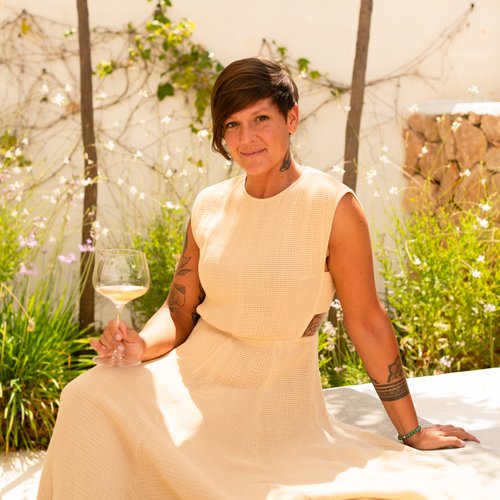
“Today Cava stands up for itself, while fifteen years ago the client prioritised Champagne”, Núria Vidal sommelier at El Terrat

After studying communications electronics, she had no hesitation in changing course when she was offered a job as a waitress at the Hotel Imperial Tàrraco in Tarragona. However, she wanted to get a proper training first, and she did this at the Hospitality School in Cambrils. She had flirted with serving drinks, but in a discotheque, while she was studying. “I didn't know how to serve dishes,” she says in all sincerity. Tenacious and inquisitive, she studied Hospitality and, when she finished, there was still a job waiting at the Imperial Tàrraco. “At the hotel they drank very classic wine brands and after a while I realised I wouldn't make much progress,” reveals Núria Vidal, now the sommelier at the restaurant El Terrat. She's been there for a year and three months, and with her the wine list has taken a radical, necessary turn towards Catalan wine. Bubbles, and Cava in particular, play a large role there because they match the cooking with Moroccan and Mediterranean roots by chef Moha Quach, new talent winner at the 2025 National Gastronomy Awards. “Today Cava stands up for itself, while fifteen years ago the client prioritised Champagne,” states Vidal. She is a perfectionist, orderly and methodical sommelier, who always seeks to create harmonies between food and wine to enhance the gastronomic experience. The sparkling wines she serves form part of the stated intention of this Tarragona restaurant to strive to highlight the local quality, producers and products. In fact, when a client orders an aperitif, we always offer a glass of Cava before any other drink.
How did you end up switching from electronics to wines?
After five years studying communications electronics I didn't find a job and the offer by the Imperial Tàrraco to be a waitress suited me. But after working there for three years, I looked for other job options and ended up in the Degvsta restaurant in Tarragona. There I got into working with wine; I started tasting lots of them and getting to know their stories. I signed up for a specialisation course at the Rovira i Virgili university and, apart from designing the wine list, we were bold enough to try tastings with clients just before they began their meal. It was highly innovative, but at the same time I suppose we'd do it very differently now. Then we talked about aromas, colours and smells, while today we'd talk about landscapes and people. I was there for 7 years and then I ran a couple of other restaurants with the idea of carrying on learning and broadening my knowledge.
At Degvsta you forged your link with wine, and you've come to El Terrat with plenty of experience. How have you approached the wine list over the last year?
I found 400 great wines, both international and from here, and the Catalan wines included both very special and rather standard bottles. So I've tried to highlight the diversity and richness we have in Catalonia, wines offering good value in terms of pleasure compared to cost, with a story behind them that the client can understand and take away with them. Now it's a slightly slimmed-down list, with 340 wines but more local ones; 40% are Catalan.
The relationship with the type of cuisine is crucial, and Moha Quach creates signature dishes but with plenty of nuances and accents. How have you worked with this?
While we have a chef who uses lots of Moroccan spices, because that's where he comes from, he also bases his dishes on Roman cooking with garums, and Catalan cooking. It's a cuisine based on the ingredients, that pursues proximity, that bears in mind the farmer, the fisherman... And this is the same philosophy as the one behind the wine list.
When does Cava appear at the table?
When the client hesitates, I always recommend it. Because it goes with our whole menu, from first to final course. We often serve Cavas aged for years, because we know they go very well with the tajine, the spices and so on. Or with a romesco with prawns from La Ràpita, or with tuna marinated in cream of almond and organic cherry tomato... It's the best solution. What's more, Cava means celebration. We always end up opening bottles at home, and when people come to the restaurant, especially in a group, we assume they want to celebrate.
When does Núria Vidal personally have a glass of Cava?
Well, very often when I finish work. I like that moment of stopping after a busy day. I half-fill a glass and as I drink it slowly I can switch off from it all. I must say that afterwards it puts me in a better mood.
Do the clients of El Terrat let themselves be advised?
Quite a lot, and one way or another we like it when they need us. We suggest things to them depending on what they like. First of all I ask them whether they prefer Cava, white or red. I like to know what they usually drink so as to take a decision one way or another. But if in doubt, we always serve Cava. In the tasting menu there are two sparkling wines, one Cava and one 'ancestral', and it's a journey through eight wine regions in Tarragona province.
Now that it's a special time of year, I think more of it's drunk.
Now is when people drink more than in the rest of the year. There are people who always drink Cava because they consider it a gastronomic drink, but at this time there's always someone who, at the end of a meal with a group, says bring a bottle of Cava for dessert.
What skills do you think a sommelier needs to have in a gastronomic restaurant?
You have to know how to listen and mould yourself to the client's needs. Getting to know their tastes, their criteria, giving them options... I always appear at the table with two or three wines and discuss them before letting them choose. I think you have to be friendly and establish a dialogue whenever the diner wants, to tell them the story of the wine or Cava they're drinking. They like the individual stories and achievements there are behind the bottles.
Is the value of Cava sufficiently understood?
15 years ago it was hard to get clients to drink Catalan wine. They preferred a Rioja to a Priorat and a Champagne to a Cava. Now Cava stands up on its own but we have to carry on supporting it.
Can you confirm that consumption of white and sparkling wines has risen recently?
Since 2003, when I started out in hospitality, the panorama has changed a lot. There are plenty of styles of whites and Cavas, varieties, regions... and ways of making and ageing them. And that gives us a lot to work with. The client looks for crispness and nowadays we can also offer them a Cava aged for six years to go with, for example, the tajine of venison marinated with spaces, venison Royal, sweet potato, beetroot and orange flower water we serve, or of course also with a creamy rice with red prawns from Tarragona.
The sommelier probably has to surprise rather than please with wines. This means you have to learn constantly.
When I have time off, I try to visit wineries and chat a lot. We always buy wines we don't know to try at home. I'm very inquisitive and I always like trying new things. I like comparing and above all I like the winemakers to tell me about them, so that I can then do the same with the client to enhance their experience.